Product Development
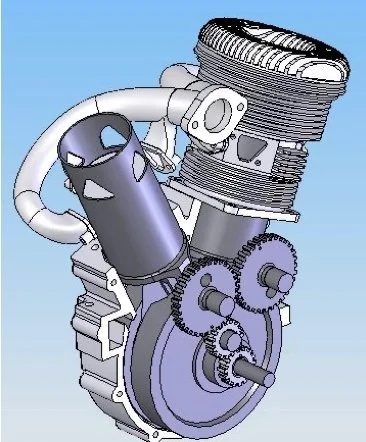
The sleeve valve engine type represents a technology with broad application. The goal has been to demonstrate and develop a mid-sized engine platform with direct applications. A data base is built that allows for smaller or larger engines to be developed. Further technological innovations are being investigated to pursue design changes that accommodate multi-cylinder configurations, specifically in-line topology.
The development process has taken advantages of modern practices that were not available during the first generation of work completed in the 1930’s and 1940’s. 3D tools allow for accelerated product development, for instance making upscaling/downscaling much easier to implement. AI is another more recent addition to the proverbial toolbox. It’s initial applications have been felt in improvements to management-related tasks while more recent advancement are impacting design processes.
Military applications of the Current Platform
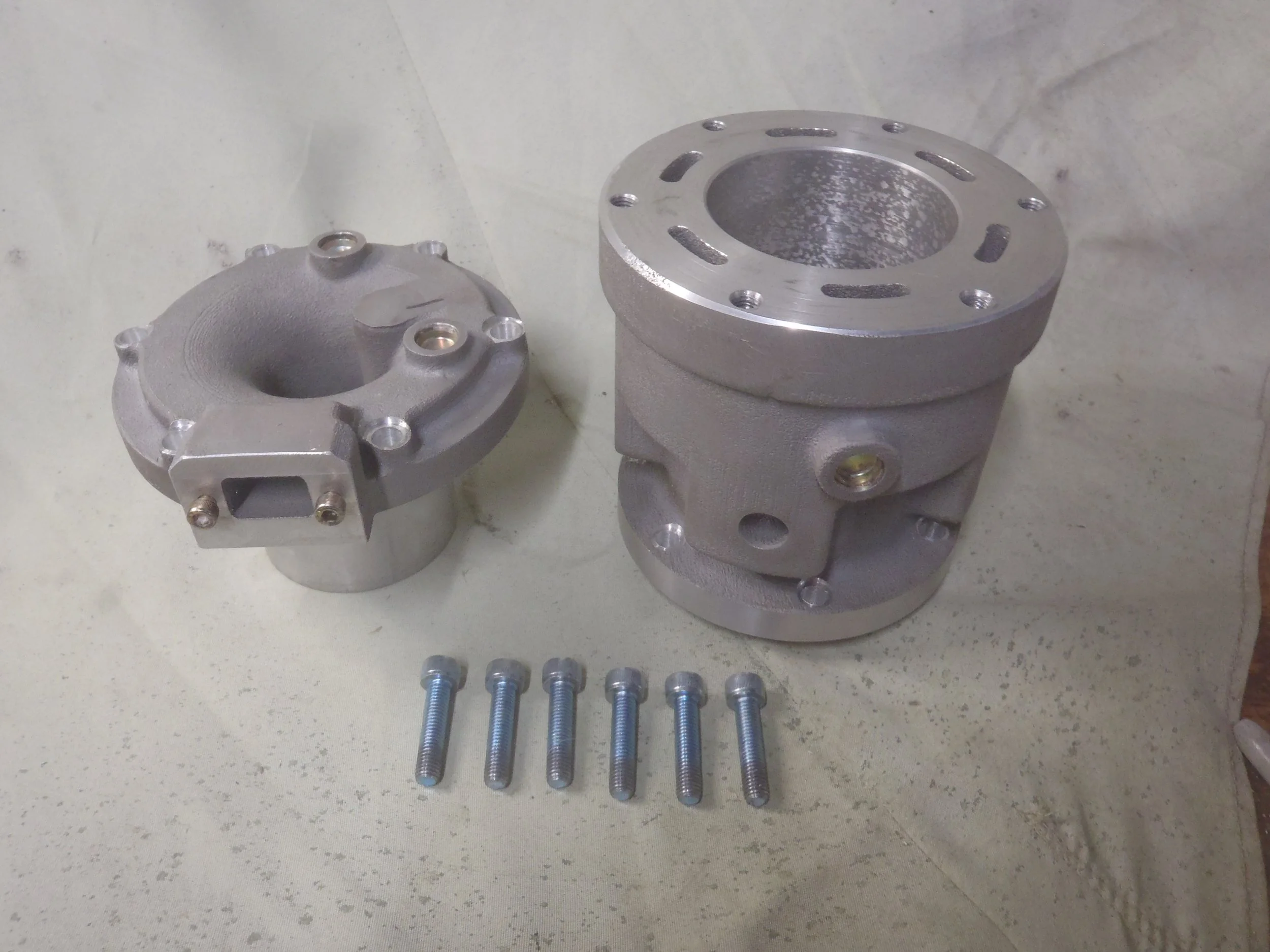
The current test article displaces 270 CC; a size that was chosen with direct applications in mind. These applications involve operation with JP-8 fuel using a compression ignition combustion system. This represents a durable and fuel efficient alternative to many options currently available in small engine platforms. For military applications this engine size could be easily adapted for use in Group 3 UAS and ground power generation. Under the sponsorship of the Maryland Industrial Partnership (MIPS program) some initial steps were taken to productionize the unit, specifically casting the head and cylinder in A356-T6 aluminum.
Big Ideas, Real Impact.
Every event we host is designed with intention, from the atmosphere we create to the way each session flows.
Hydrogen Operation
The world needs green energy alternatives to power generation. This is particularly demanding with respect to mobile power needs where battery technology is leaving voids. A stellar example of this is the long distance trucking industry within the US, now being met by diesel powered Class 8 tractor-trailers. Using hydrogen as a fuel can result in zero GHG emissions for internal combustion engines. The conversion of traditional diesel engines has been hampered by technological challenges, one of them being inadequate injection technology. This has led the industry to turn to fuel cells, which are proving to be a not-ready-for-prime-time technology.
The sleeve valve engine can fill this void. The architecture of the engine is one of a handful of designs that allow for hydrogen injection during the early part of the compression stroke while shielding the injector from combustion pressures during the expansion stroke. This combination enables the adoption of an internal combustion engine powered genset to service the electric truck (sometimes called a range-extender) at efficiency levels on par with fuel cells or any other competing technology.
SVE Technology has been conducting feasibility studies in 3D modelspace. These confirm the validity of the approach and allow for the efficient development of test hardware.
Big Ideas, Real Impact.
Every event we host is designed with intention, from the atmosphere we create to the way each session flows.
SVE Technology LLC Contract History
#6417/The Modernized Sleeve Valve Engine, Phase I
Awarded by Maryland Industrial Partnership (MIPS), Awarded
#6721.20/ The Modernized Sleeve Valve Engine Test and Evaluation, Phase II
Awarded by Maryland industrial Partnership (MIPS), Awarded
F8650-22-P-2308, The Single Sleeve Valve Engine Implemented as a High Performance UAS Platform
Awarded by Air Force Research Lab (AFRL), July 2022
-
customer, dates, goals, value
how this completes a strategy
-
customer, dates, goals, value
how this completes a strategy
-
customer, dates, goals, value
how this completes a strategy
-
customer, dates, goals, value
how this completes a strategy